
Santa Rosa Voter Lookup Fields
Two official routes serve a Santa Rosa voter. The California Secretary of State's My Voter Status tool is the preferred check because Sonoma County says it is closer to real time. The county's secure registered-voter lookup remains available as a second route. Both are identity-gated self-service tools. They do not let a visitor type an unrelated name and browse the county roll.
| Lookup control | Input type | Required | How it works |
|---|---|---|---|
| Birth Date | Date | Yes | The Sonoma form expressly marks this credential as required. |
| Sonoma County voter identification | Grouped identity fields | Yes | The voter supplies details connected to the county record. |
| My Voter Status identity fields | Text and date fields | Yes | Sensitive details unlock only the voter's own state record. |
| Registered Voter Lookup | Tool link | No | Opens the county registration check. |
| Ballot, district, and polling tools | Tool links | No | Opens separate election-specific checks. |
Enter the information exactly as it appears on the registration. If the state result and county display differ, contact the Registrar of Voters rather than assuming one status is final. The state is the better first check, while county staff can address a local record that needs review.
The California status screen shows the official starting point for Santa Rosa voter registration.
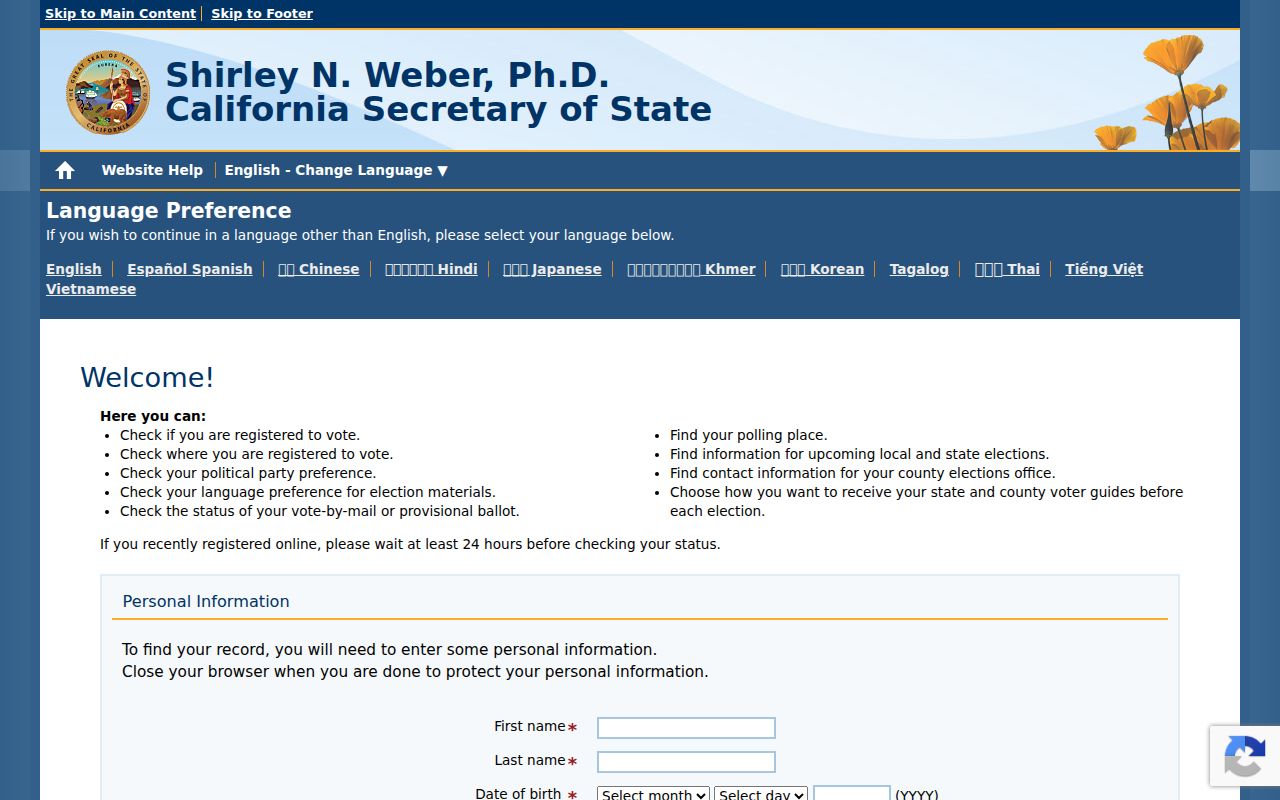
Its identity gate is what separates a personal status check from access to voter-file data.
Sonoma Tools for Santa Rosa Voters
The Sonoma Secure Voting Information hub divides election questions into distinct tools. A voter can move to the registered-voter check, vote-by-mail ballot status, district and elected-official lookup, or polling-place and sample-ballot lookup. This layout matters because registration status is not the same record as ballot tracking or district assignment.
The county registered-voter form requires a birth date plus voter identification details. Use it when a Sonoma-specific check is useful, but remember the county notes that its posted information requires manual intervention and is not updated as close to real time as the state service.
The Sonoma registered-voter form illustrates the local identity check.
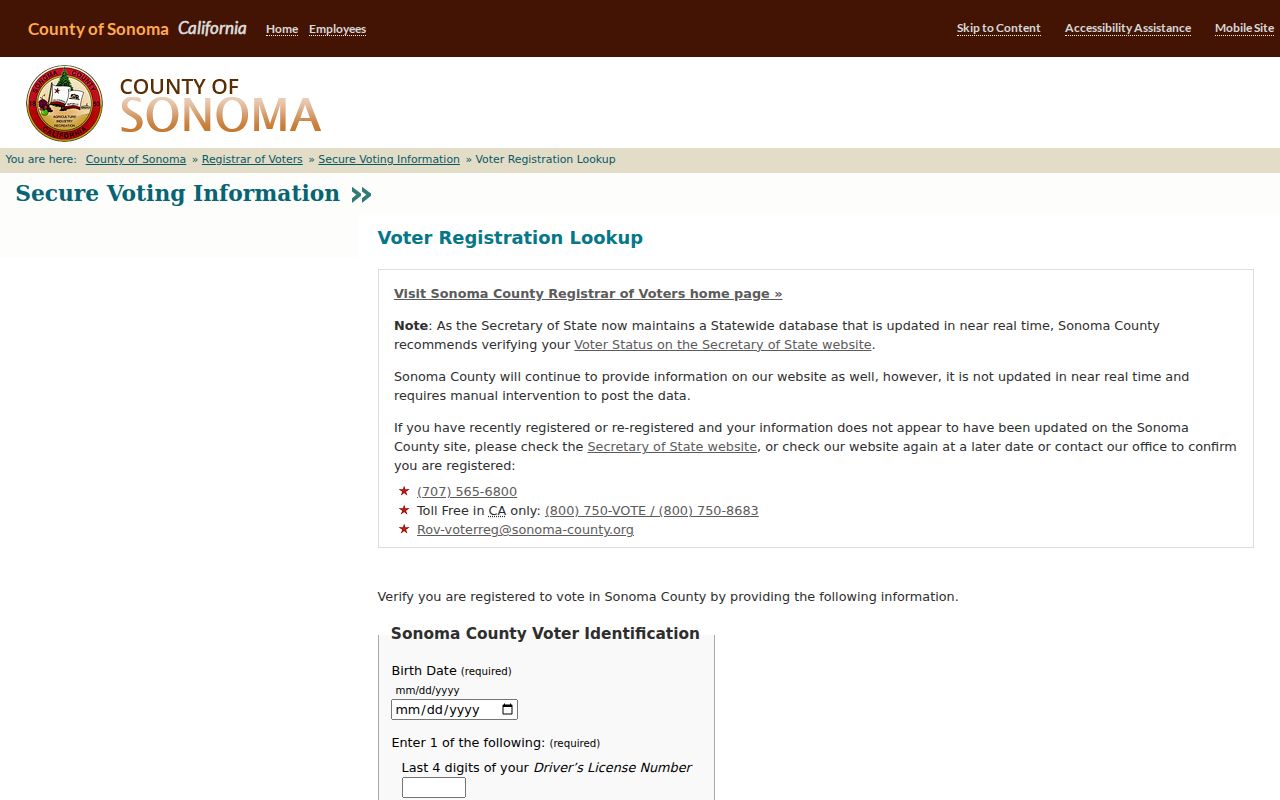
The required credentials keep the county screen focused on the person whose record is being verified.
The secure election hub shows the separate Sonoma lookup choices.
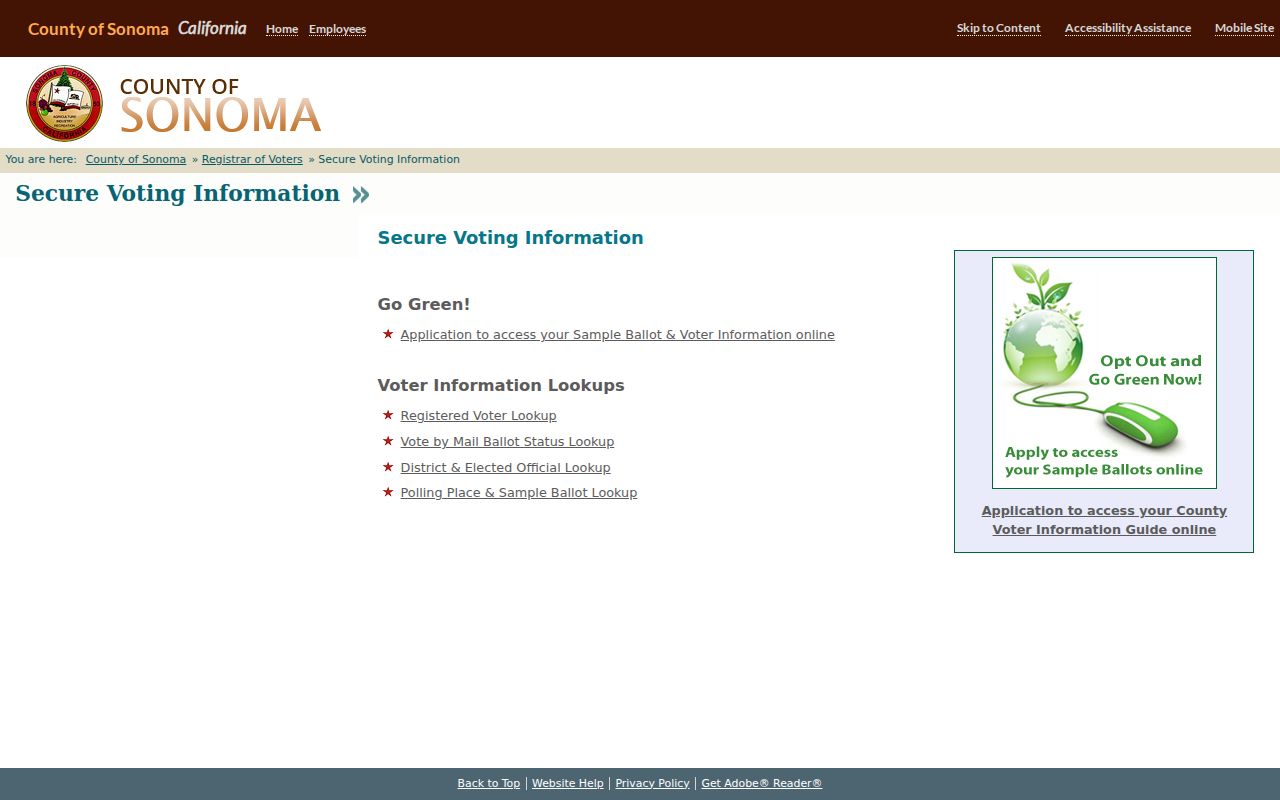
Choosing the right tool avoids treating a mailing, district, or ballot question as a registration error.
Note: The state status tool is the recommended first check, while Sonoma election staff remain the fallback for a local discrepancy.
What California Voter Records Contain
A matched self-lookup may confirm whether the person is registered, the registered address, political party preference, language preference, ballot status, polling place, election information, and voter-guide delivery choices. A permitted voter file can carry other administrative fields. The file records participation, not a marked ballot.
| Name | Identifies the voter in an official file released only for an approved purpose. |
|---|---|
| Residence address | Determines contests and districts; protected voters are excluded from releases. |
| Mailing address | Directs mailed election material and may differ from the residence. |
| Party and language | Preferences may be confirmed through My Voter Status. |
| Ballot status | Shows vote-by-mail or provisional status, never the choices on a ballot. |
| Participation history | May show whether a voter took part in an election, but never how that person voted. |
Birth date functions as a credential and is confidential in general release. Precinct, districts, and elected officials are available through the county's district tool. These limits explain why a Santa Rosa voter registration search produces different results for the voter and for an approved file requester.
Confidential Santa Rosa Voter Records
California treats all voter data as controlled information and adds stronger protection for confidential voters. Elections Code sections 2166, 2166.5, and 2166.7 cover protected registrations. The Secretary of State's guidance states that confidential voter records are never included in Public Voter Registration Data Requests. Section 2166.9 separately limits access to confidential contact details tied to protected officials or candidates.
Confidential by law. Full birth dates, identity credentials, and protected-voter addresses are not general public output, and confidential registrations are excluded from voter-file requests.
The Safe at Home program helps people who fear for their safety keep an address out of public records through a substitute-address and mail-forwarding system. That protection connects directly to confidential voter status. A missing address in a released file may therefore reflect a legal safety measure, not an incomplete registration.
Santa Rosa Address and District Geography
Residence and mailing addresses do different work in Sonoma elections. The residence places a voter in the correct contests, precinct, and districts. The mailing address tells the office where to send election material. This is especially useful after a move or displacement, when mail may go to one place while the voter remains registered at another qualifying residence.
The county hub's District & Elected Official Lookup is the right tool for a representation question. Registration status belongs in My Voter Status or the county registered-voter form. Keeping those routes distinct gives a clearer answer than relying on an old sample ballot or a saved mailing label.
The Sonoma voter information page explains the county and state lookup choices.
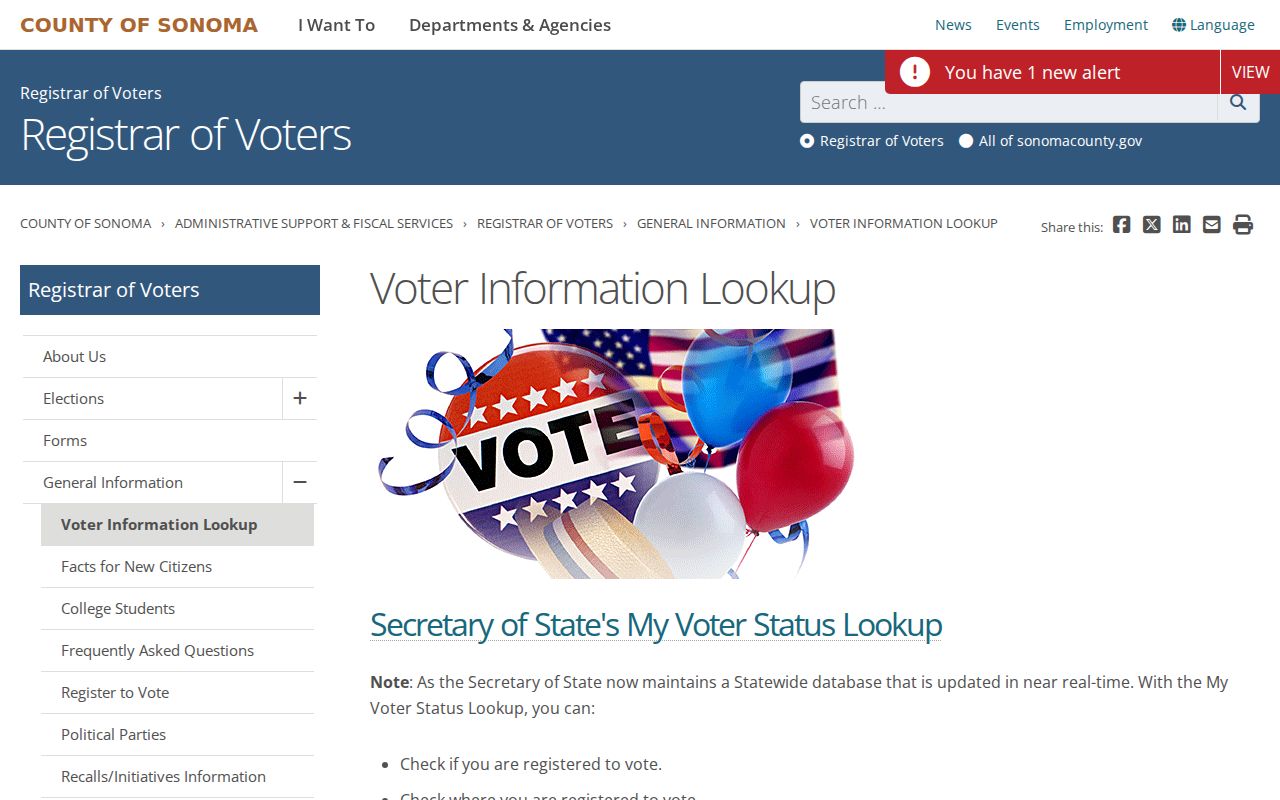
Its tool-by-tool routing helps a Santa Rosa voter choose the status, district, ballot, or polling-place path that fits the question.
Santa Rosa Voter File Requests
The current voter roll is not an open name directory. Under Elections Code sections 2188 and 2194, Sonoma County releases voter registration information only for governmental, political, journalistic, or educational purposes. The county says a written request to view, buy, or use the data must be submitted in person with identification. The exact local fee was not published in the inspected material, so applicants should confirm current cost and format with the Registrar of Voters.
- Choose the county or state request route and identify the voter list, election data, district data, or precinct data needed.
- State a qualifying use and provide the applicant's name, contact details, and identification required by the office.
- Sign the use agreement, accept the restrictions, and ask the office to confirm the current fee and delivery format before payment.
- Receive only the approved data. Confidential voters are removed automatically from the release.
The Sonoma purchase information page is the local application starting point.
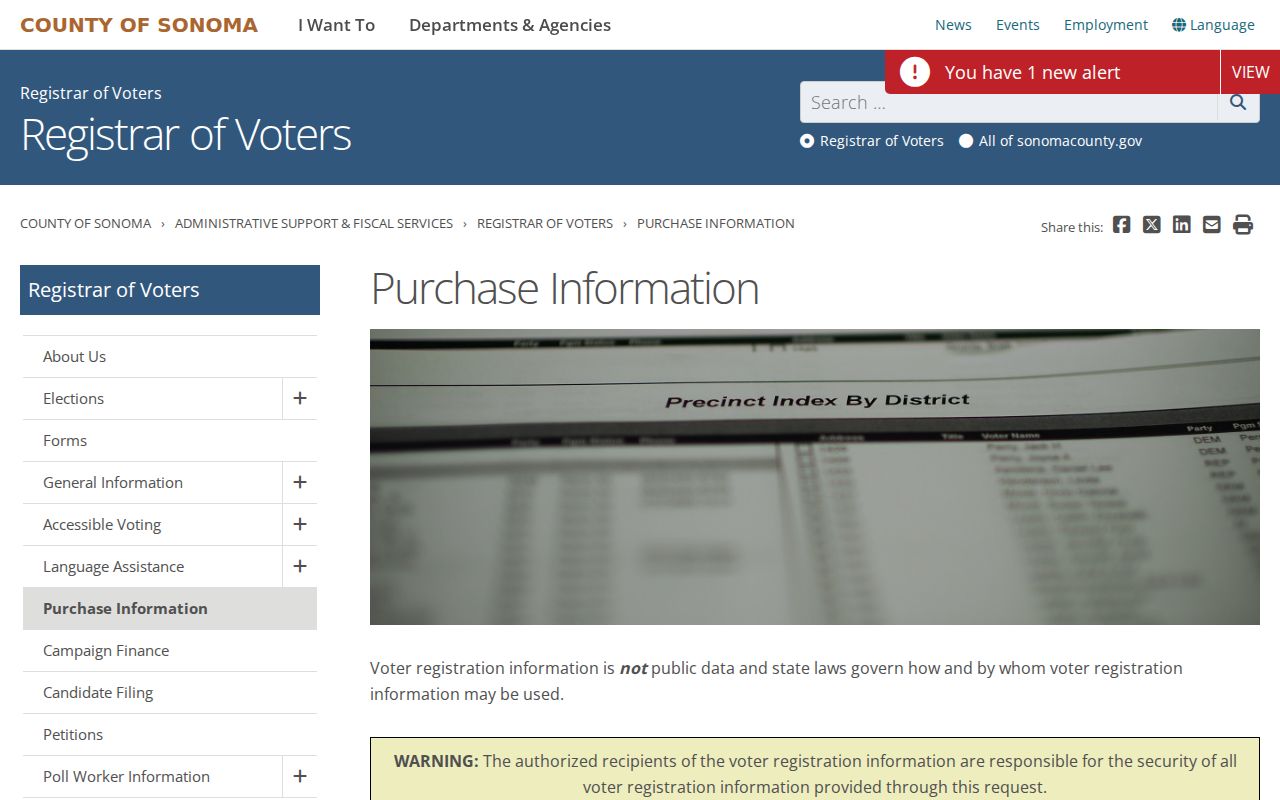
The county instructions make purpose, written application, and identity review part of access rather than optional details.
For broader access-law context outside election data, use the explanation of Santa Rosa public records without treating the CPRA as a shortcut around Elections Code restrictions.
Lawful Use of Santa Rosa Voter Rolls
A requester must keep the data within the purpose approved on the application. Commercial misuse, harassment, and any purpose outside the statutory categories are prohibited. Passing the file to someone with no approved purpose does not erase the original requester's duties. The Sonoma Registrar of Voters and the Secretary of State Elections Division are the proper reporting points for suspected misuse.
Use the roll as approved. Voter-file access is purpose-bound under Elections Code sections 2188 and 2194, and it must never be used to stalk, harass, or harm anyone.
Do not infer more than a field proves. Participation history means that the voter took part, not that the voter supported a candidate or measure. A mailing address is not always the qualifying residence. A withheld record may be confidential. These distinctions protect both sound research and the voter.
When a Santa Rosa record seems wrong, keep a copy of the status result and contact the Sonoma election office through its official channel. Ask staff to explain the correction route that fits the record rather than sending sensitive identity details through an unverified address. That preserves both a useful audit trail and the privacy built into the lookup.
Note: Ballot secrecy is absolute in these records; neither a self-lookup nor a permitted file reveals a person's selections.
Historical Santa Rosa Voter Directories
Old registrations serve a different human use from the live file. The Sonoma County History and Genealogy Library lists voter registrations among its local collections. The Sonoma County Genealogical Society separately indexes the 1890 Great Register of Voters. The California State Archives identifies Great Registers as a local-government record type.
For family history, a register can place a named person in Sonoma County during a particular era. Pair it with city and telephone directories, tax assessments, deeds, probate indexes, or naturalization files. This chain can help distinguish people with similar names and show when a household appears or disappears from local records.
Current voter-file restrictions should not be projected onto every archival source, yet each repository sets its own handling and access terms. Ask the library or archive which register, index, or format covers the period before making a visit.
Santa Rosa Election Transparency Records
Election-result transparency is not the same as browsing individual voter records. Sonoma County introduced an online election-results database in 2025 after a 2024 Civil Grand Jury recommendation for a public election information repository. It supports review of election outcomes and administration, not access to how a named voter cast a ballot.
This distinction keeps civic review on the right record set. Use election-result data for totals and public reporting. Use secure status tools for a voter's own record. Use the formal application process for a purpose-approved file, and use historical registers for genealogy. Each route answers a different question and carries a different privacy boundary.